
Issue 21: The Lotto Effect
Why strategic dreaming needs strategic constraints.
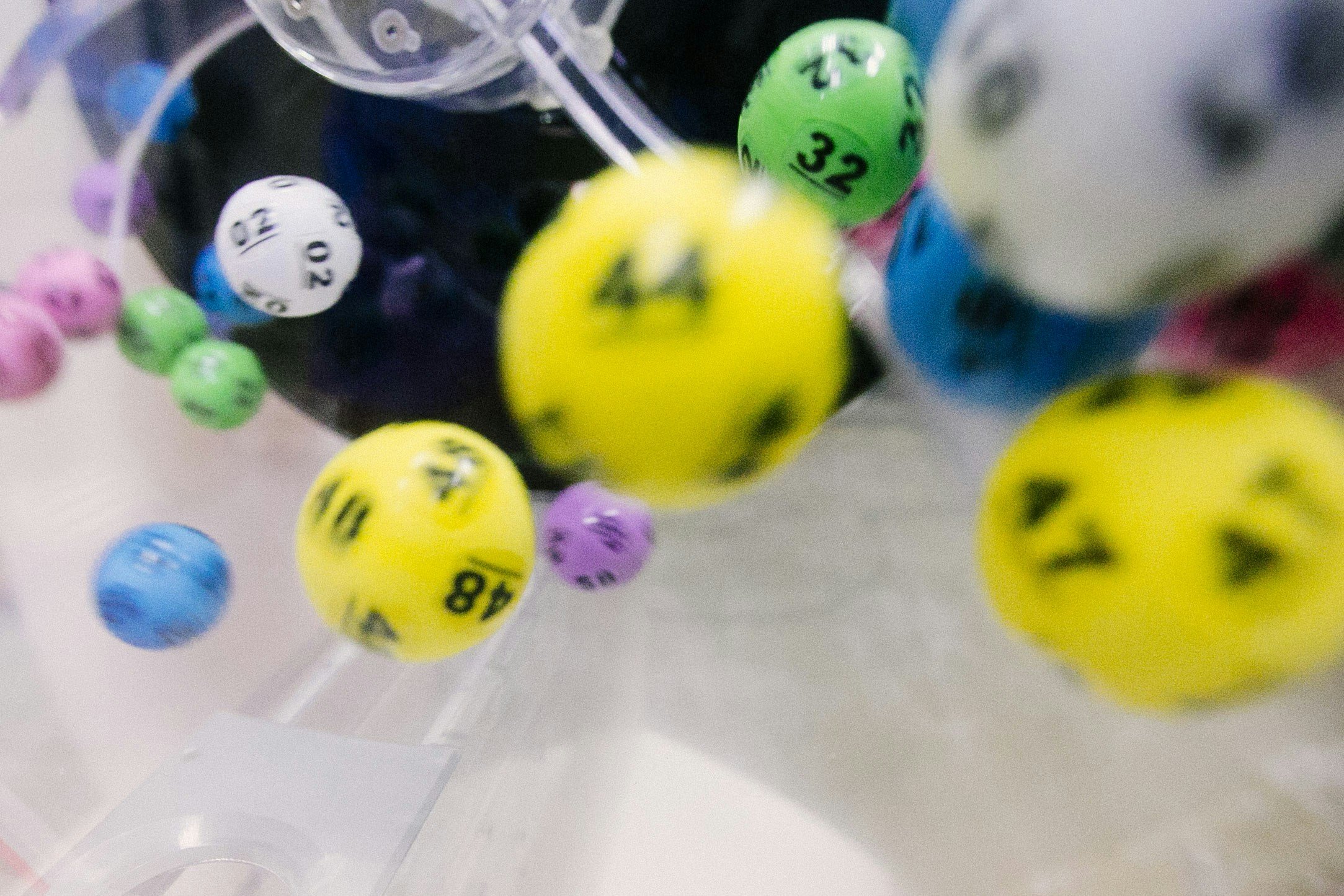
James and I play a game, one I am sure the majority of adults, and probably adolescents, play too. A game of make-believe, some may even say hope, a game of manifestation. It comes at the price of £2 a week, maybe more depending on how often you play. It comes from buying a lottery ticket.
Before you feel thoroughly let down by this blog, by the obviousness of playing the Lotto, the pleasure doesn’t come from checking your ticket after a Saturday night draw. It’s not the game itself; it comes from not checking it. It is the long, drawn-out hope derived from the possibility that the winner who hasn’t come forward yet may be you! The dream, or self-delusion (depending on whether you’re a glass-half-full or glass-half-empty kind of person), is worth putting off checking your numbers for.
Because the space between the numbers being drawn and you checking the ticket is where the imagination comes alive. It’s where mansions are built, live-in chefs employed, jets chartered to exotic destinations.
Unless you’re my husband, whose version of dreaming big is a very obtainable car, maybe upgrading the house by a maximum of two bedrooms and moving just a smidgen closer to the village centre… ahhhh, to be as content as a gamer who already has his own office and comfortable gaming chair.
There is such a momentary bliss in suspending reality in favour of make-believe. But there is also something powerful in this ability to conjure an image of the future that we have touched upon in a previous blog. The benefit of visualising your 80-year-old self is, as previously explained, that you psychologically become more invested in what needs to happen now to make that a reality. If, like James, you see yourself skiing down a mountain, weaving the slopes with your grandkids in tow, then you know you need to be creating financial security, staying in peak health and cultivating a relationship with your kids that means you will be holidaying together in 35 years’ time!
But some of us mere mortals find dreaming of the ‘unknown future’ incredibly difficult. The fact that anything is possible, when your current desires revolve around a good book, a log-burning fire and some uninterrupted sleep, means the sky doesn’t have to be the limit. With a few home improvements, I could be living the dream by year’s end.
When we work with corporations, we ask them to undertake a similar exercise. We consider what may have happened to the company over the next 20 years, and we do it to help develop an ambition: an audacious vision that, coupled with your purpose, can pull you into the future.
Much like my experience of visualising my future self, often people look into the endless possibilities of an unwritten journey ahead and unceremoniously fall at the first hurdle! How am I supposed to know what is going to affect the future of the company, what we could become and the part I have to play in it? and the question needs to be posed why can I dream big for my future millionaire status, but stick to what I know when the future I am inventing is more intrinsically attached to the reality I am living today?
There is a huge array of emotions attached to looking and failing to see beyond your projected trajectory: panic, disappointment, hopelessness, a stuckness that brings you back to the comfort of solving the problems of today.
When playing the ‘imagine if we won the Lotto’ game, there are no constraints, no limitations, because the only factor you have to consider is a limitless budget (because, let’s face it, you don’t play that game and limit your winnings, do you??). Whereas with the ambition of a company, one that is significant, enduring, stretching and compelling, suddenly you’re playing with all stakeholders in mind, external and internal factors weaving such circumstances around the future that you’re tied up in knots before the phrase ‘what if…?’ can form on your lips.
But there are reasons beyond simply, ‘I don’t have sole responsibility for its future, so how can I decide?’ Research suggests something else is going on.
It turns out our brains may not be particularly well designed for imagining a future completely untethered from what we already know. Research into what psychologists call episodic future thinking suggests that when we imagine what might happen next, we don’t create the future from scratch. We construct it using fragments of our memories and previous experiences; in fact, remembering the past and imagining the future rely on many of the same brain systems. Add our tendency towards the status quo bias – preferring what we already know over the uncertainty of change – and perhaps it’s unsurprising that when asked to imagine something wildly different, we struggle. We are essentially asking a brain that uses yesterday as its building material to construct a tomorrow it has never seen.
There is an important distinction here. Looking backwards isn’t inherently limiting; in fact, it is vital. We use yesterday to uncover purpose, unpicking the experiences that reveal what has meaning to the self and impact beyond the self. Purpose is designed to be stable over time. It gives us a scaffold from which to adapt, manoeuvre and respond to change with an understanding of who we are. It anchors us without tethering us.
The problem comes when the same past that helps us understand who we are begins to dictate what we could become. If our brain’s natural inclination is to reach for yesterday when constructing tomorrow, how do we make sure yesterday provides the foundations without defining the skyline?
Research into creativity suggests that the right constraints can actually support creative thinking. So, rather than asking people to ‘think blue sky’ from nothing, perhaps we need to give our imaginations something to push against.
Start with the challenges you can already see. What are the biggest ones facing your industry? What’s the best that could happen? The worst? Stretch them out over 10, 20, 30 years. What happens if they accelerate, disappear, or completely change shape? What would your organisation need to become, not just to survive that world, but to thrive in it?
Then widen the field of vision. What are the challenges facing society as a whole? The world, even? Climate, technology, inequality, ageing populations, movement of people and resources we currently take for granted. In what ways might they threaten what you do? More interestingly, what opportunities might they afford you?
And here is the time to face back into your purpose. If you navigated a course through all of those possibilities in a way that held meaning to the self and created impact beyond the self, what might become possible?
What if?
None of this suddenly gives us the cognitive ability to gaze comfortably into the unknown. We are still trying to build something we have never seen, using a brain that naturally reaches for what it already knows. But perhaps these questions give our imagination a scaffold for ideas to cling to. Something to push against. Something that helps us lift our eyes beyond the problems immediately in front of us and see a skyline that yesterday, on its own, might never have allowed us to imagine.
And maybe that is all ambition needs to do. Not to predict the skyline, but pull us towards one we haven’t built yet.